

New Investigation Exposes Predatory Creditors Pushing “Rent Now, Pay Later” Loans
We found companies including RealPage pushing a new breed of predatory loan.


Millions of Americans struggle to make rent every month, and the typical household now puts an average of 31 percent of their income towards rent payments. This week, a new joint investigation from Protect Borrowers and Towards Justice reveals how firms from Wall Street to Silicon Valley are scrambling to turn the high cost of housing into easy profit by pushing risky credit on working families.
Our investigation charts the rise of “Rent Now, Pay Later” loans—short-term, high-cost loans that are little more than repackaged payday loans. Companies market these loans as a way to split up fast-rising rent payments. In reality, however, these loans are far more expensive than companies may make them appear, and they come with a wide range of potential tricks and traps. With help from banks, including ones backed by venture capital funds like Andreessen Horowitz, these Rent Now, Pay Later companies can add thousands of dollars every year to rent bills that are already unaffordable.
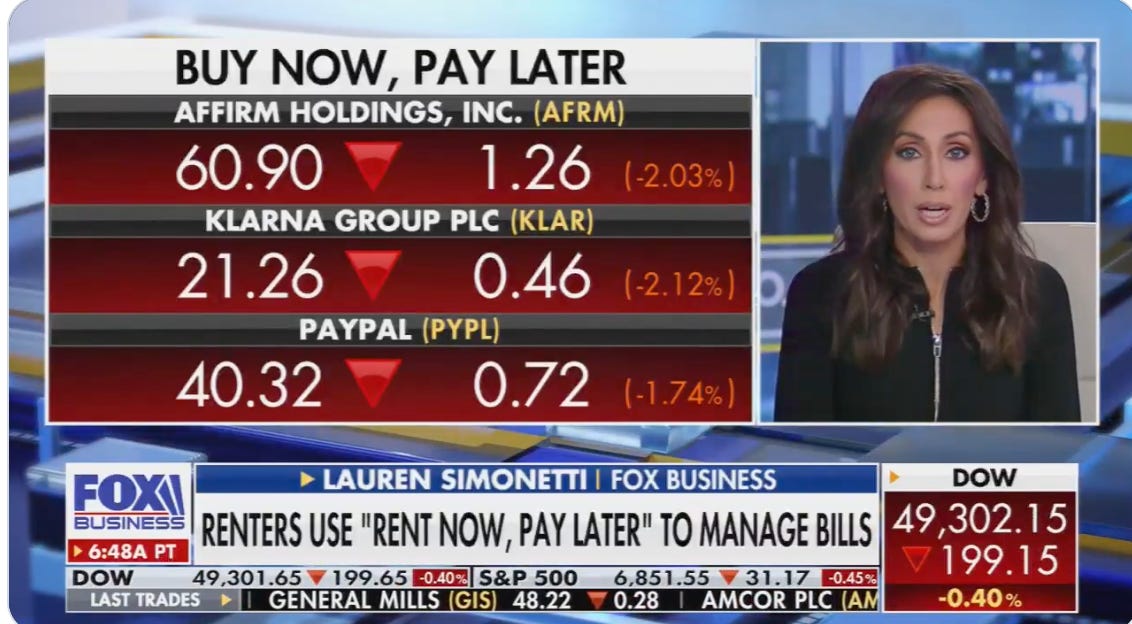
We focused on firms across this emerging market, including Livble, a Rent Now, Pay Later company owned by the rental platform RealPage. RealPage has been accused by the U.S. Department of Justice and state law enforcers of executing a far-reaching scheme to raise the cost of rental housing in communities across the country.
It’s important to take a step back and consider what is happening here, from the perspective of private equity giants like Thoma Bravo, which owns RealPage/Livble, corporate landlords, and other private investors exposed to the rental housing market. A growing body of research suggests that the rapid, post-pandemic rise in rent overshot its mark in many markets. People are being charged more rent than the market will bear. Many have argued that RealPage is a culprit here—coordinating with landlords to form, in the words of DC Attorney General Brian Schwalb, a “housing cartel.” Our report offers a theory of what is happening next: landlords recognize that tenants don’t have the money to make rent, so rather than lower rents or offer relief, they choose to drive their tenants into debt instead.
Once again, we see families paying the price when a market fails. It is a tale as old as time.
Diving in a little deeper, our new report reveals disturbing trends about Rent Now, Pay Later companies, and should serve as an alarm bell for federal, state, and local regulators and law enforcers. Protect Borrowers’ and Towards Justice’s findings include the following:
Rent Now, Pay Later companies deploy a wide range of tactics—but they all push risky loans, some of which carry huge interest rates. Rent Now, Pay Later lenders may have different structures, and some are already in the existing Buy Now, Pay Later market, but they all push products that involve huge costs and attempt to hide these fees by mislabeling charges and misleading consumers. In some cases, that obfuscation appears to attempt to exploit loopholes in the Truth in Lending Act, including technicalities around which specific fees that law requires companies to disclose. In other cases, companies’ tactics rely on them framing loans so that consumers are unlikely to realize how payments might ultimately “stack” on top of each other, causing costs to snowball. Our investigation revealed that in certain cases, the interest rates on these loans can exceed 180 percent—making them several times more costly than possible alternatives.
Rent Now, Pay Later loans involve massive risks for renters, including possible eviction—and lenders are using tactics that have been cited by regulators as violating federal law. Complaints submitted to regulators like the Consumer Financial Protection Bureau (CFPB) and posts on social media platforms like Reddit reveal that Rent Now, Pay Later lenders appear to be unable to consistently deliver their advertised services, and to lack the basic customer support functions necessary to fix their mistakes. As a result, these companies have left consumers at risk of eviction through no fault of their own. In addition, these companies have deployed onerous repeat debit strategies that are already illegal under federal consumer protection statutes, have demanded direct and risky access to people’s bank accounts, have exposed working people to potential risks from dubious credit reporting that the companies spin as a helpful benefit, and more. All of these risks sit on top of a mountain of additional and dangerous fine print that holds up Rent Now, Pay Later products’ contracts.
Shady “rent-a-banks”—and in particular the venture capital-backed, Trump-connected Lead Bank—are cashing in on Rent Now, Pay Later. Rent Now, Pay Later companies have generally chosen to base their lending on deals with banks willing to lend out their charters to the highest bidder. These so-called “rent-a-bank” agreements have historically proven to be a vital method for fintechs to skirt certain state consumer protections and push loans with APRs into the hundreds. One particular bank, Lead Bank of Missouri, appears to be particularly active in the Rent Now, Pay Later market. That bank has seen its profits increase by a factor of five over the past five years as it has leaned into supporting fintech lending, and it recently reached its own multi-billion dollar valuation through fundraising backed by venture capital fund Andreessen Horowitz.
This market is growing fast. Just last week, the Buy Now, Pay Later market leader Affirm announced that it intends to offer some customers a Rent Now, Pay Later option. Taken together, the wave of new entrants offers evidence that lenders and landlords view rental debt as a key lever to prop up high housing costs and paper over families’ struggles to make rent.
To protect the more than 109 million renting households in the U.S., policymakers and law enforcement officials at every level of government to take immediate action to prevent corporate landlords, predatory lenders, and shady fintech companies from exploiting renters’ financial instability by driving them into rental debt, including by investigating and prosecuting Rent Now, Pay Later firms for violating federal and state consumer protections.
We also call on prudential regulators to supervise and enforce federal banking laws against banks engaged in Rent Now, Pay Later lending, and urge states to exercise their powers under federal law to protect consumers from predatory, out-of-state rent-a-banks. Finally, we call on federal and state lawmakers to ban corporate landlords from owning, operating, marketing, and embedding Rent Now, Pay Later products on rent payment platforms.
Our full report, Rent Now, Pain Later: How “Rent Now, Pay Later” Loans Put Working People at Risk, is available here.
Ben Kaufman is a Senior Fellow at Protect Borrowers and led this investigation into Rent Now, Pay Later lenders.
Mike Pierce is the Executive Director of Protect Borrowers.
 | A guest post by
|